
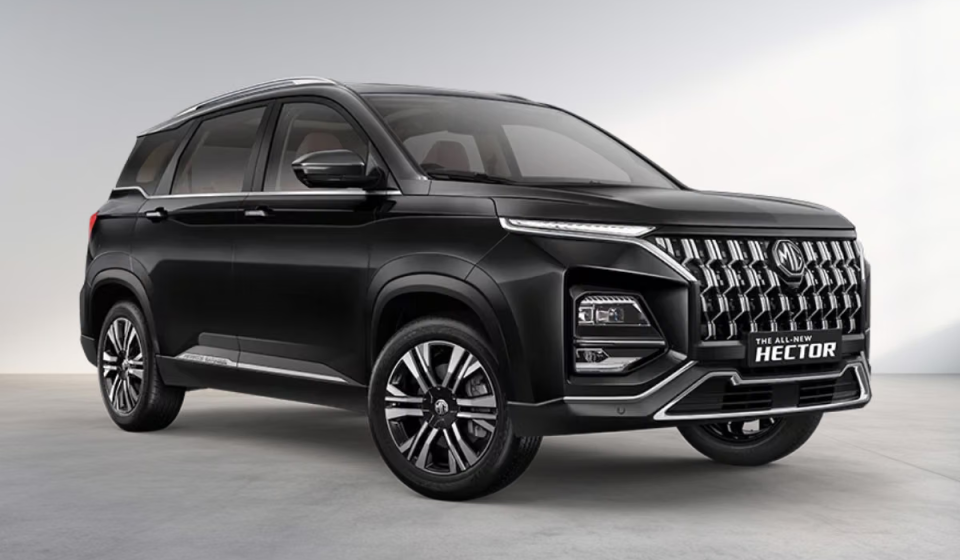
Is the MG Hector safety rating good enough for families?
Six airbags, electronic stability control, tyre-pressure monitoring, all-wheel disc brakes and available Level 2 ADAS are reassuring, yet an India-specific current NCAP result remains important context.
Crash-test rating and what is officially known
The MG Hector offers a broad active and passive safety package, but buyers should separate equipment from independent crash-test evidence. A current India-spec Bharat NCAP or recent Global NCAP rating should be verified before treating any star score as applicable. Older ratings from related markets or previous versions may use different protocols and equipment. Where a current official score is unavailable, it is more accurate to say so than to infer one from the feature list.
Safety equipment families can value
MG lists six airbags, ABS with EBD, electronic stability control, traction control, hill assist, tyre-pressure monitoring and a 360-degree camera on relevant Hector versions. Higher variants add Level 2 ADAS functions designed to assist with warning, braking and lane support.
| Safety feature | Availability or role |
| Airbags | Up to six, depending on variant |
| ESC and traction control | Helps maintain stability and reduce wheel slip |
| TPMS | Warns about abnormal tyre pressure |
| 360-degree camera | Supports low-speed manoeuvring |
| Level 2 ADAS | Available on higher variants; driver remains responsible |
How ADAS should be interpreted
Driver-assistance features can reduce workload and warn of certain hazards, but their performance depends on road markings, weather, sensor visibility and system limits. Indian traffic can include unpredictable lane behaviour, animals and unmarked roads. Families should view ADAS as an additional layer, not a substitute for defensive driving.
Child and rear-seat protection checks
Parents should confirm ISOFIX positions, three-point seat belts for occupied seats, child-lock operation and whether the selected child seat fits securely. A large cabin does not automatically guarantee correct restraint geometry. The safest installation is the one that follows both vehicle and child-seat instructions.
- Use a compatible child seat and follow the installation guide.
- Check three-point belts for regularly occupied seats.
- Confirm the exact airbag count on the chosen variant.
- Do not disable safety alerts merely because they feel intrusive.
Size can help and hinder
The Hector’s substantial body and high seating position may feel reassuring. However, its width and weight require greater attention in narrow streets and emergency manoeuvres. Good tyres, correct pressure and disciplined speeds remain essential to making use of the available electronic safety systems.
Family verdict
The Hector’s equipment list is strong enough to merit consideration, especially in variants with the full safety suite. The missing piece is a directly applicable, current crash-test result if none has been published for the exact India-spec version. Families should combine equipment verification, careful test driving and independent rating evidence rather than relying on one marketing claim.
Family safety checks beyond the feature list
Before finalising this topic, verify the latest manufacturer brochure, the exact variant specification and the local dealer quotation. A short test drive should reproduce the buyer’s normal roads rather than a smooth demonstration loop. This helps reveal visibility, ride quality, control effort and cabin comfort that cannot be understood from a specification sheet alone.
Ownership quality also depends on factors outside the headline figure. Insurance coverage, tyre replacement, scheduled service, warranty exclusions and resale expectations can change the overall value. Recording these items beside the purchase price creates a more complete comparison and reduces the chance of choosing is the mg hector safety rating good enough for families? on one attractive number alone.
Inspect the exact Hector variant, not the brochure headline
Safety lists often combine equipment available across several trims. A family should request the feature sheet for the exact variant and confirm whether side and curtain airbags, front parking sensors, blind-view functions and ADAS are included. The difference between ‘available’ and ‘standard’ can be significant.
During the test drive, check whether the driver can see the bonnet edges, mirrors and surrounding traffic clearly. Camera systems help at low speed, but dirty lenses and glare can reduce their usefulness. Physical visibility remains important in school zones, apartment basements and crowded markets.
Tyre replacement quality deserves attention after purchase. Fitting a cheaper tyre with a lower performance or load specification can weaken wet braking and stability. Families should retain the recommended size, speed rating and load index, and replace tyres in suitable pairs or sets.
Use independent evidence with equipment checks
The final decision should be documented in one page: the chosen configuration, the strongest reason for buying it, the main compromise and the expected annual cost. Writing these points down helps separate a durable need from showroom excitement. It also makes later comparisons more consistent because every alternative is judged against the same household priorities rather than a changing list of impressions.
Independent crash testing and safety equipment answer different questions. A strong equipment list shows the systems available to prevent or manage an incident, while a crash result measures protection under a defined impact protocol. Both should be considered together.
Families should also review post-crash support, including emergency calling, roadside assistance and workshop access. These services do not alter crashworthiness, but they can influence how quickly help and repairs are arranged after an incident.
Total Views: 126