
The Ultimate Guide to Wedding Reception Lighting
Ask any wedding planner and they’ll tell you the same thing: couples will spend months agonizing over every single flower and table runner. Then, with about a week left on the countdown, a sudden wave of panic hits. The culprit? They suddenly look at their venue layout and realize nobody ever thought about the lighting.
If we’re being entirely realistic, your guests will likely forget the exact tabletop arrangements before the night is even over. What they won’t forget, though, is the general atmosphere. That’s the secret power of great lighting. It completely shifts the mood, transforms a blank-canvas venue into an experience, and—as a major bonus—determines whether your wedding photos look stunning or totally washed out.
The catch? The wedding lighting world is absolutely packed with industry jargon. Between talk of uplighting, spotlighting, and various LED setups, it easily feels like you’re trying to decode a completely foreign language.
Thankfully, you don’t need a crash course in electrical engineering to get this right. We’re going to break down the absolute essentials of lighting up your wedding reception in Houston, TX, keeping things simple and completely stress-free.
What is Uplighting and Spotlighting?
Map out any reception layout, and you’ll find the entire strategy boils down to these two words.
● Uplighting
Think of uplighting as ground-level artistry. By positioning light fixtures directly on the floor, you cast a sweeping glow upward against walls, structural pillars, and unique architectural accents. It’s arguably the most efficient way to inject instant character into a completely blank room.
I’ve worked with dozens of different affrodable wedding venues in Houston, and I consider uplighting an absolute must-have. The way it throws ambient warmth and depth across a room is unmatched. It’s especially powerful for transforming older or darker ballrooms; you can make a plain space feel instantly cozy and upscale without having to invest in an expensive structural makeover.
● Spotlighting
Spotlighting does the opposite. Instead of illuminating an entire ocean, it highlights specific features. Spotlights help important details stand out (especially once the room lighting is dimmed), such as:
– The wedding cake
– Sweetheart table
– Floral installations
– Centerpieces
– First dance area
Key Takeaway
The best lighting plans combine both. Nailing the venue’s vibe is a delicate art form. Flood the room with basic overhead lighting, and you instantly erase the drama. It flattens the entire environment, turning a potentially stunning design into something completely clinical. But dim it down too far, and your guests will literally be using their phones to find their forks. The magic happens when you layer uplights and spotlights together. It builds a gorgeous contrast that instantly makes your decor pop.
Popular Lighting Styles to Match Your Vibe
Romantic and Intimate
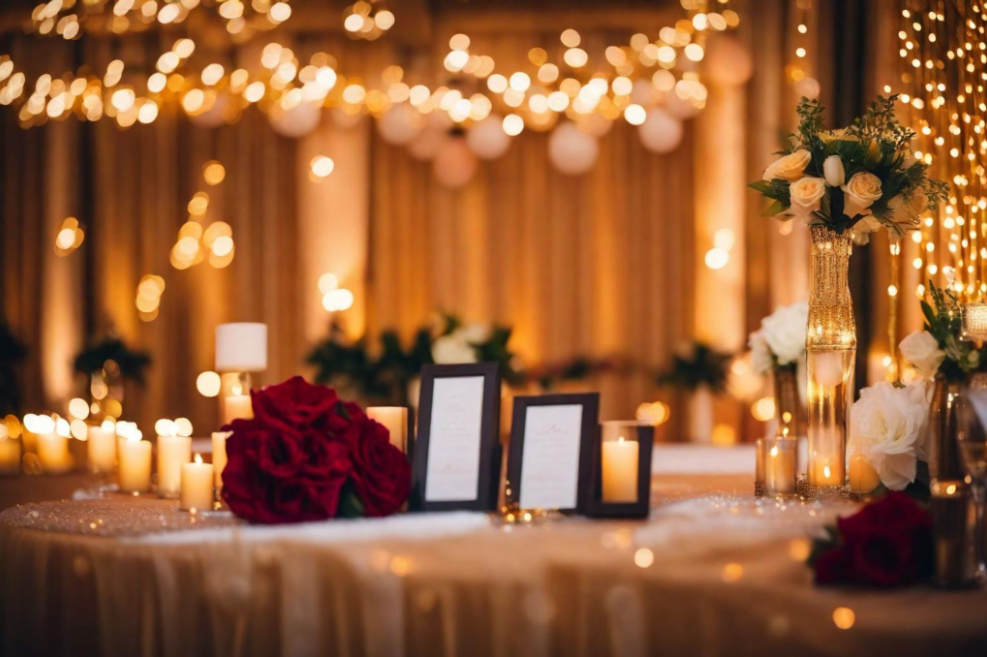
Old-school candlelight has a way of completely transforming a space. For some of my favorite designs, I’ve blended long-lasting votives with low-key amber washes and vintage chandeliers. The final look is pure romance. It gives the space an ultra-cozy, cinematic quality, completely erasing any of that corporate, plain ballroom feel.
Whimsical and Fairy-Tale
For a softer touch, classic café strings or fairy lights are an absolute lifesaver. When you drape them back and forth across the ceiling, you get this beautiful, glittering effect that gives guests the illusion of dining right under the stars. It’s an incredibly striking design choice for reception halls in Houston, TX with rustic covered pavilions or open-air garden courtyards.
Electric and High-Energy
Ready to turn the dance floor into the main event?
If you want that true club or concert vibe, you’re looking for intelligent lighting. This setup relies on moving, automated fixtures operated live by an on-site technician. It allows the room’s energy to evolve dynamically with the playlist; the lights will dance right along with your guests, shifting colors, sweeping across the space, and hitting every beat drop perfectly. Think less ballroom and more concert experience once the party starts.
Pro Tips For Nailing the Atmosphere
#1: Use Dimmers Whenever Possible
Event designers often say that getting the light levels right is the most of the battle.
Here’s a little trick from the field: go ahead and drop the illumination a notch lower than your first instinct tells you to. Our eyes naturally adapt to the darkness within a few minutes, and that deeper, muted glow instantly makes the entire room feel incredibly intimate and forgiving.
#2: Understand LED vs Incandescent
Modern LED lighting offers incredible flexibility. Color can change instantly, and energy usage stays low.
Don’t be too quick to ditch old-school incandescent lighting, though. A ton of wedding pros actually choose them over modern alternatives simply because they cast a much gentler, amber warmth across the entire venue. It’s incredibly forgiving on skin tones and creates the kind of dreamy lighting that photographers absolutely love to work with.
#3: Don’t Forget Safety
Look, nailing that dreamy, intimate aesthetic matters, but simple logistics have to take priority. Safety layout isn’t something you can compromise on. Continuous, clear lighting is a non-negotiable requirement for your high-traffic zones throughout the entire reception. Make sure your main walkways, restrooms, exit doors, and stairs stay well-lit from the initial arrival until the final grand exit. Keeping these spots bright simply ensures a seamless flow of foot traffic and prevents a minor slip from stealing the spotlight.
What Does Wedding Lighting Cost?
A professional wedding reception lighting setup will usually run you between $1,000 and $4,000. It can increase according to the design’s complexity. A professional package often includes:
– Lighting design consultation
– Set up and breakdown
– Intelligent lighting systems
– Technical support during the event
– Customized lighting timeline
Take budget wedding venues in Houston, like Azul Reception Hall, for instance. They wrap everything into clear, straightforward event packages, meaning things like venue setup, decor management, and connections to reliable local vendors are entirely taken care of for you.
It’s honestly no surprise that so many all-inclusive wedding venues in Houston are moving toward this model. Such packages give you total clarity on your budget right from day one, which is why couples love it! There’s no guesswork involved anymore.
Think of lighting as the true pulse of your reception hall. A great setup holds complete authority over your reception space. It completely dictates how the room feels, effortlessly taking your guests from a dreamy, intimate dinner atmosphere to a wild, packed dance party later in the night. Lowering it on your priority list is a massive mistake. It essentially builds your reception experience from the ground up, guides the general energy of the crowd, and ensures your media team has flawless backdrops for magazine-worthy wedding shots.
FAQs
- Why is lighting important for a wedding reception?
In many ways, strategic illumination acts as the invisible backbone of your entire reception design. It carries the power to shift a room’s atmosphere on a dime, command the exact energy of the crowd when the dancing starts, and protect your wedding album from looking flat or pixelated. Ultimately, there isn’t a faster or more impactful tool for turning a standard, blank-canvas hall into a genuinely immersive experience.
- How do I choose the best venue lighting?
Look for venues with built-in options. Top venues in Houston, like Azul Reception Hall, provide customizable, high-tech lighting packages, saving you the stress and extra cost of hiring outside vendors.
- Does wedding lighting affect photography?
Absolutely. Bad lighting forces your photographer to fight against the room, often resulting in grainy or dull pictures. Good lighting acts as a massive asset instead. It makes your floral arrangements pop, ensures everyone looks fantastic on camera, and provides the exact contrast needed for magazine-quality wedding photos.
Total Views: 140