
Built for Strength: How Sand Casting Manufacturers in India Deliver Performance
Introduction
Heavy industrial components rarely fail because of one dramatic mistake. Most failures begin much earlier through internal stress concentration, weak grain formation, shrinkage cavities, uneven cooling, or inconsistent metallurgical structure that slowly reduces strength during continuous operation. In the beginning, the component may appear perfectly acceptable from the outside. The problem only becomes visible later when the casting faces vibration, pressure cycling, thermal stress, or repeated mechanical loading inside real industrial conditions.
This is exactly why global industries are paying closer attention to the capabilities of Sand casting manufacturers india rather than treating castings as simple commodity products. Buyers today are evaluating dimensional consistency, internal soundness, grain stability, thermal behavior, and long-term mechanical reliability with far greater seriousness than before.
The shift is happening because industrial systems themselves have become more demanding. Modern machinery operates at higher speeds, under heavier loads, and with far less tolerance for structural inconsistency. Under these conditions, casting quality directly affects equipment lifespan and operational stability.
Indian foundries are gaining stronger international attention because many manufacturers have moved beyond basic volume production and are now delivering technically controlled casting systems capable of meeting global engineering expectations.
Casting Strength Begins Inside The Solidification Stage
The performance of a casting is largely decided during cooling and solidification rather than after machining.
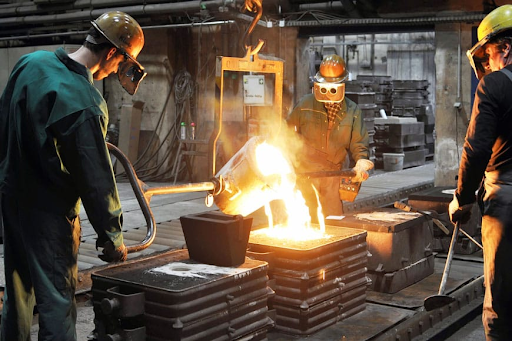
When molten metal enters the mold cavity, temperature distribution immediately starts influencing grain development and shrinkage behavior. If cooling becomes uneven, internal stress concentration develops across different sections of the casting.
Thicker areas cool more slowly while thinner regions solidify faster. Without proper gating and riser control, this difference creates porosity, shrinkage cavities, and unstable grain structure.
This is why experienced Sand casting suppliers India focus heavily on controlling metal flow and solidification behavior instead of depending only on final inspection processes.
A casting that solidifies correctly generally requires fewer corrective actions later during machining and finishing operations.
Mold Quality Directly Affects Structural Integrity
The sand mold itself plays a much larger role in casting quality than many non-technical buyers realize.
Moisture balance, permeability, grain fineness, binder consistency, and mold compaction all influence how gases escape during pouring and how evenly the casting cools afterward.
Weak mold preparation creates multiple downstream problems:
- Surface blowholes
- Gas entrapment
- Dimensional instability
- Poor surface finish
- Uneven cooling behavior
Modern Industrial sand casting in India increasingly uses controlled sand preparation systems where moisture and compaction are monitored more precisely than earlier foundry operations.
The improvement in mold consistency has significantly improved casting repeatability across large production volumes.
Metallurgical Control Has Become More Important Than Raw Output
Older foundry operations often focused heavily on increasing production volume. Modern casting buyers are far more concerned about metallurgical stability.
Mechanical performance depends strongly on internal grain structure. If alloy chemistry drifts or cooling rates become inconsistent, tensile strength, hardness distribution, and fatigue resistance change throughout the component.
This is especially critical in industries where castings face repeated load cycling or thermal stress.
Because of this, advanced Engineering casting solutions India increasingly involve tighter control over:
- Melt chemistry
- Pouring temperature
- Inoculation timing
- Cooling rate
- Heat-treatment consistency
The strongest foundries are not simply pouring more metal. They are controlling how the metal behaves during transformation from liquid to solid state.
Automotive Demand Has Raised Casting Standards Significantly
The rapid growth of automotive manufacturing has changed Indian casting capability dramatically.
Modern vehicles require lighter, stronger, and more dimensionally accurate cast components than older systems. Engine housings, brake components, transmission cases, suspension parts, and structural assemblies all operate under continuous vibration and variable load conditions.
Because of this, Automotive casting manufacturers in India have invested heavily in improving metallurgical consistency and dimensional precision.
Automotive systems leave very little room for casting instability because even small internal defects eventually affect durability under long operating cycles.
The technological improvements developed for automotive manufacturing have strengthened casting capability across multiple industrial sectors.
Internal Defects Usually Create Long-Term Operational Problems
Many casting problems remain invisible during initial visual inspection.
A component may appear structurally acceptable externally while containing internal discontinuities that later become failure initiation points under stress. Porosity, micro-shrinkage, inclusion entrapment, and uneven grain distribution gradually weaken the casting during service life.
This is why advanced foundries increasingly rely on inspection methods such as:
- Ultrasonic testing
- Radiographic inspection
- Spectrochemical analysis
- Hardness mapping
- Microstructure examination
Modern buyers sourcing from Sand casting manufacturers india are increasingly demanding internal quality consistency rather than surface appearance alone.
Long-term reliability depends heavily on what exists inside the casting structure.
Export Markets Demand Better Process Stability
Global customers are far stricter today regarding casting consistency than they were a decade ago.
Earlier, many export buyers focused heavily on pricing advantages. Today, industrial downtime costs are much higher, and replacement failure creates larger operational losses.
Because of this, Export quality castings India now require tighter process discipline throughout the production cycle.
International buyers increasingly evaluate:
- Repeatability between batches
- Machining stability
- Metallurgical consistency
- Surface integrity
- Dimensional tolerance
- Long-term durability under load
The strongest Indian foundries have responded by improving process monitoring instead of relying only on post-production correction.
The Gating System Quietly Determines Casting Reliability
One of the most underestimated parts of casting production is the gating and riser design.
Poor gating creates turbulence during mold filling. Turbulent flow traps gases, increases oxide formation, and disturbs solidification stability. Weak riser placement also prevents proper feeding during shrinkage stages.
The result is internal structural weakness that may only become visible later during machining or service operation.
This is why advanced Sand mold casting process in India increasingly depends on simulation software and controlled gating calculations before actual pouring begins.
Foundries are now predicting metal behavior instead of correcting defects afterward.
This shift has improved yield quality and reduced structural inconsistency significantly.
Machining Precision Has Become Equally Important
Modern industrial castings often move directly into precision-machined assemblies where alignment accuracy becomes critical.
Even if the casting itself remains structurally strong, dimensional instability creates problems during assembly and operation.
Because of this, many Engineering casting solutions India now integrate casting production with CNC machining and dimensional verification systems.
This combined approach improves:
- Assembly precision
- Surface alignment
- Rotational balance
- Operational stability
- Interchangeability consistency
Global buyers increasingly prefer suppliers capable of controlling both casting integrity and machining accuracy together.
Heat Treatment Strongly Influences Mechanical Performance
Heat treatment is another major factor separating advanced foundries from basic production operations.
Improper heat-treatment cycles create uneven hardness distribution and residual internal stress. Components may initially appear acceptable while carrying unstable mechanical properties internally.
Controlled heat treatment improves:
- Fatigue resistance
- Tensile stability
- Impact strength
- Dimensional consistency
- Wear resistance
Many modern Sand casting suppliers India now use tightly monitored furnace systems capable of maintaining more stable thermal cycles across large production volumes.
This improves long-term casting reliability under demanding industrial conditions.
Why Indian Foundries Continue Expanding Globally
Several factors are driving global growth for Indian casting manufacturers simultaneously.
The industry now combines:
- Improved metallurgical capability
- Better production precision
- Stronger export infrastructure
- Competitive manufacturing economics
- Wider machining integration
- Higher process automation
These improvements have increased confidence among international buyers sourcing industrial castings from India.
The market is responding not only to cost competitiveness but increasingly to manufacturing reliability and engineering capability.
Final Perspective
Modern casting performance depends far more on process control, metallurgical stability, cooling behavior, and dimensional precision than many buyers once assumed.
The growing international demand for Sand casting manufacturers india reflects broader improvements across mold preparation, solidification control, machining integration, inspection capability, and thermal processing systems.
As industrial machinery continues operating under heavier loads and tighter engineering tolerances, buyers are placing greater importance on castings capable of maintaining structural reliability over long operating cycles.
The manufacturers gaining long-term trust are the ones quietly improving grain structure stability, reducing internal defects, controlling thermal behavior, and delivering cast components that continue performing reliably long after production is complete.