Fintech Explained: Benefits, Types, Real-World Uses, and Trends
Fintech, commonly known as financial technology, has transformed how individuals manage their finances. Interactions that used to be performed in a bank office, for hours or days, can now take just minutes via a cell phone or the Web.
Fintech has revolutionized financial services by improving access and making things much easier, whether they’re online banking, digital wallets, or investment platforms. As technology advances, fintech is playing a crucial role in the current technology landscape, impacting not just the business economy but also the personal finance sector.
What Is Fintech?
Fintech is the term for technology that enhances financial services. It incorporates the financial aspects and digital innovation to make activities like payments, banking, lending, investing, and insurance simpler. Financial institutions don’t use the same methods, but rather software, cloud computing, AI, and secure digital systems for quick and efficient service.
Fintech is no longer limited to startups. Technology is being utilized by banks, payment providers, bank insurance, and investment firms to enhance customer experience. The ultimate mission is to make financial services more convenient, faster, and widely available while maintaining their security.
Benefits of Fintech
Fintech’s convenience is among the most significant features. Financial services are available round-the-clock, rather than during traditional bank business hours or when one has a branch nearby. You can deal with bill payments, money transfers, checking account balances – anything can be done with a mobile device.
Another great advantage is speed. Digital payment systems now enable payment processing to be carried out within mere seconds, and online loan applications and account verification might be even quicker than most traditional methods. Automating payroll, accounting, and digital invoicing lowers time and operating expenses for businesses as well.
Fintech is also helping to promote financial inclusion by bringing more and more people to banks. People in outlying areas are able to have access to banks, accept payments, and check their finances online via an Internet-connected device. Other features, such as real-time transaction tracking and budgeting tools, enable users to make informed financial choices.
Types of Fintech Services
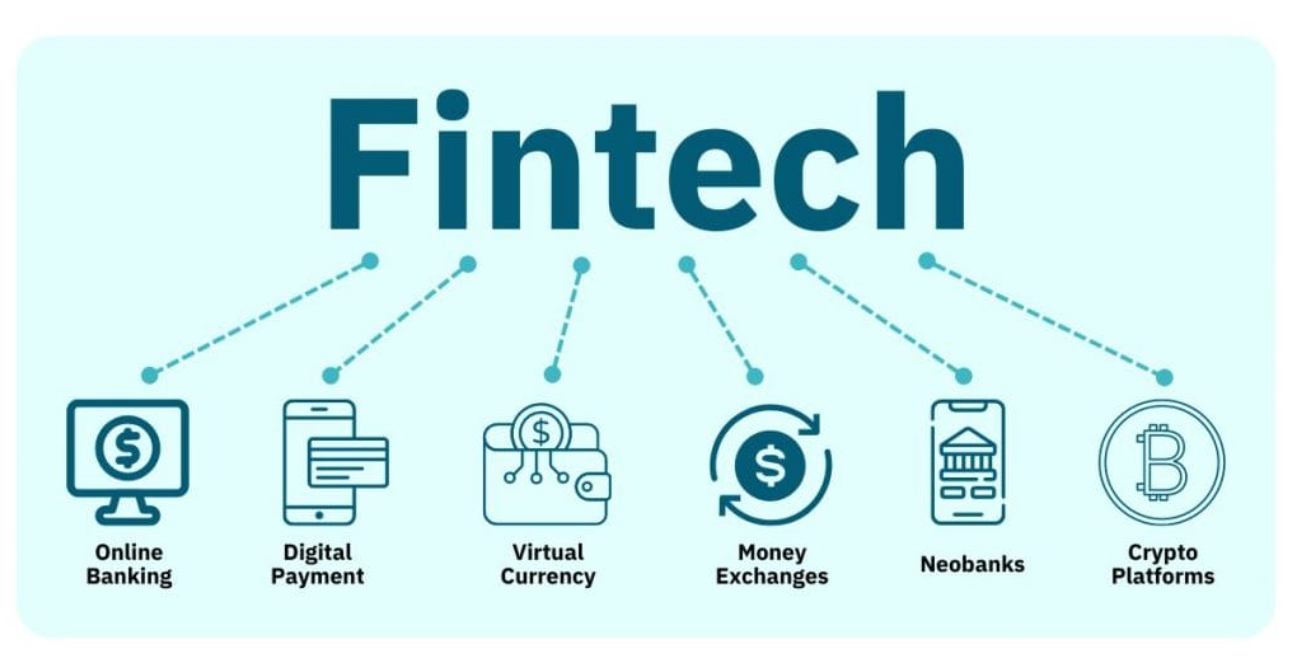
The fintech sector has a number of distinct categories to mention. Digital payment sites enable users to move money, purchase online, and make payments securely. Mobile banking apps offer services like checking balances, transferring funds, accessing statements, and managing cards, etc., without leaving a branch.
Digital platforms make lending easy; users can apply for personal or business loans from digital lending platforms. They can also cut paperwork and save time on approvals with automated verification systems.
Investment platforms have also made investing more popular these days by making it possible for investors to purchase stocks, mutual funds, or other financial products by way of mobile applications. A lot of them also provide information and automated investment platforms for newcomers.
Insurtech, also called insurance technology, is an innovation that helps customers to compare policies, buy insurance, and file claims online. This will ensure efficiency and help to save on paperwork and delays.
Real-World Uses of Fintech
Fintech has become an integral part of daily existence. Financial technology is used in soaring airline ticket prices, when you pay for food using your mobile phone, you transfer money over to your family, or you buy out a subscription. They’re digital payment experiences for millions of consumers, and it’s become normal.
Fintech is also widely employed in the business sector. Payment gateways help small businesses receive e-payments; accounting software keeps tabs on finances, and payroll software manages employee salaries. International payments are quick and secure with payment platforms on which freelancers receive compensation.
Fintech also creates value for healthcare providers by automating healthcare billing, allowing secure electronic payments, and enhancing customer experience; other types of organizations, like educational institutions, are similarly supported by fintech solutions like automated payment processing for educational expenses, secure e-payment methods, and better customer experiences. As more sectors integrate digital financial tools, these applications continue to grow.
FinTech Market
As I researched how the financial technology industry has dramatically changed, I came across one such report from Roots Analysis that helps surface the possibilities for the future of the global FinTech market. The market is expected to expand from USD 222 billion in 2024 to USD 1,818 billion by 2035 at an astounding compound annual growth rate (CAGR) of 21.04 per cent during the forecast period.
The growth is driven by the general acceptance of digital payments, innovations in AI and blockchain, the proliferation of digital banking, and heightened global efforts to foster financial inclusion. When trust and convenience for consumers are everything, and technology is the backbone of business operations, the Financial Technology industry will have a significant impact on the future of the financial industry.
Challenges Facing Fintech
Although fintech offers many benefits, there are also drawbacks. One of the top concerns is cybersecurity, as financial platforms deal with sensitive data from their clients. Mitigating against cyber threats, companies invest heavily in the areas of encryption, identity verification, and fraud detection.
Regulatory compliance is also crucial. With the intertwined nature of financial services businesses and the impact on consumers, fintech companies need to be attuned to evolving legal mandates, while also delivering innovation. A good balance is crucial to establish trust and ensuring continued growth.
Usability is influenced by digital literacy. Some are not eager to adopt online financial services, either due to a lack of knowledge of using online tools or due to security concerns. Educating and raising awareness are integral components of users’ confidence with fintech solutions.
Emerging Trends in Fintech
With emerging technologies, the fintech industry keeps innovating. AI is enhancing customers’ experiences with chatbots and improving the ability of the financial sector to identify fraudulent transactions. Machine learning can be used in financial data in a variety of ways, including analyzing transactions for anomalies and enhancing security measures.
Another emerging trend is open banking, which enables safe data-sharing between third-party service providers and customers. This will stimulate a more innovative market for financial products and create the possibility of more customized financial products.
Additionally, blockchain is shaping digital finance with its enhanced transaction transparency and global payments capabilities. In the meantime, embedded finance can make financial services like payments & lending more seamless and integrated into shopping platforms, travel apps, and other digital services, leading to a better customer experience.
Conclusion
Fintech has revolutionized customer and business relationships with financial services. It has brought about faster, simpler, and more accessible ways to bank, pay, lend, invest, and insure via technology and finance. Despite various hurdles like regulation and cybersecurity, continuous innovation will keep enhancing digital financial services. With the rise of artificial intelligence, blockchain, and other emerging technologies, fintech will have a bigger say in how the future of global finance unfolds and how financial services transactions can be optimized for all.
About the Author
Author Name: Avantika Sharma
Avantika Sharma is a content writer and healthcare/biotech enthusiast. She is an expert at making complex scientific concepts accessible, engaging, and well-researched for a broad audience. She reads fiction avidly and writes non-fiction with passion. Her curiosity, combined with painstaking research, produces informative and accessible articles that bridge the gap between science and everyday understanding.
LinkedIn: https://www.linkedin.com/in/avantika-sharma-088283334/