
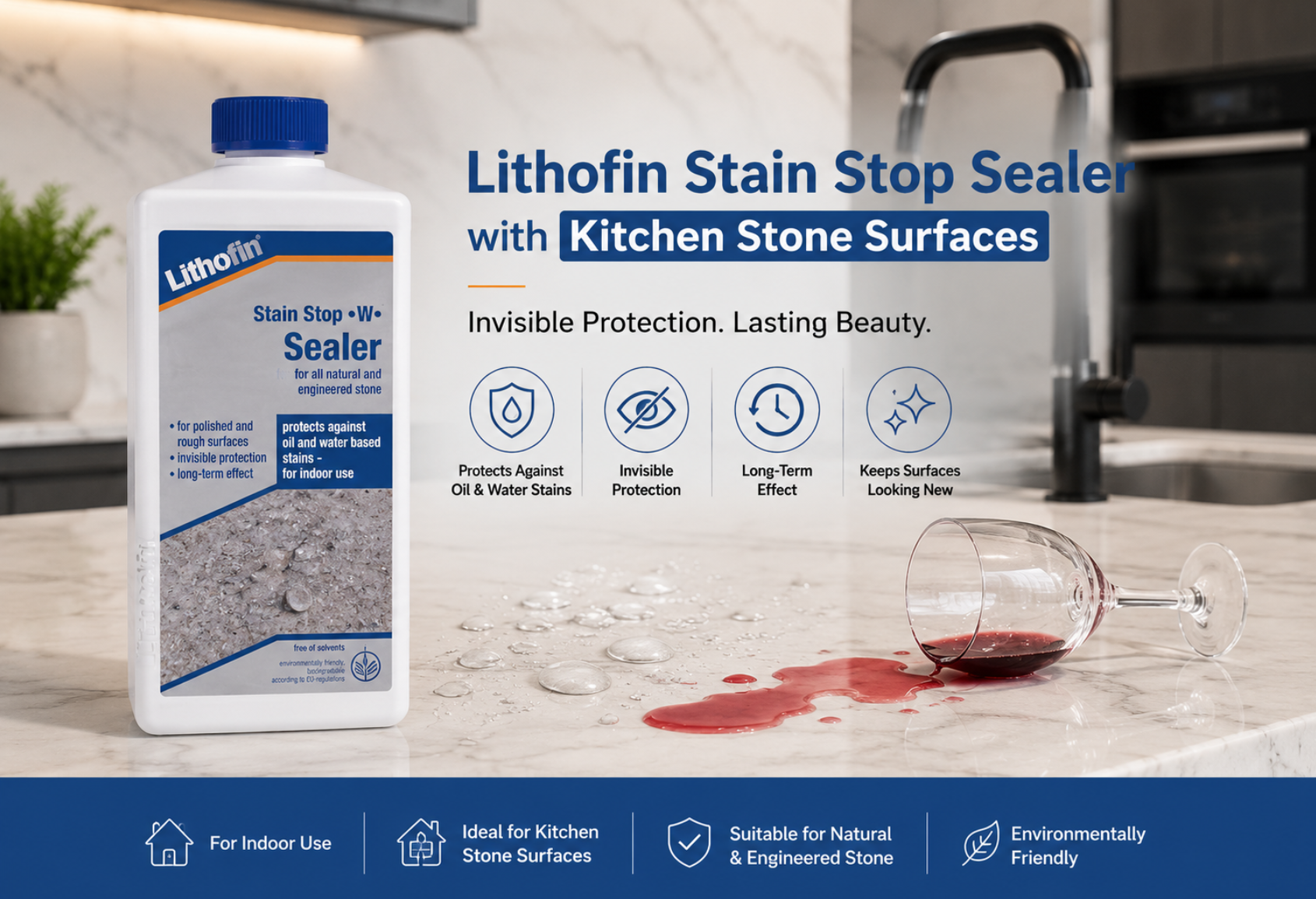
Lithofin Stain Stop Sealer: Essential Protection for Kitchen Stone Surfaces
Ever watch in horror and see red wine splashed all over the beautiful marble benchtop? Or, maybe you’ve seen the persistent oil stains that can’t be removed from granite surfaces? If you have a natural stone backsplash in your kitchen, you will understand when spills occur.
What you have to understand is that natural stone is quite beautiful, but it’s very fragile. If nothing is done about it, your gorgeous kitchen surfaces can be marred with permanent stains. That’s where Lithofin Stain Stop Sealer comes into play. This clever product creates an invisible barrier that keeps your stone looking pristine, year after year.
Let’s get started on this protection of kitchen stone surfaces guide and find out everything you need to know about the matter. Whether you’re learning how to use Lithofin Stain Stop or how to apply it, you’ll be confident in keeping your investment safe. From granite benchtops to marble splash backs, whether you have natural stone or not, this is the top resource for long-lasting protection.
What Is Lithofin Stain Stop Sealer?
Lithofin Stain Stop is a top-quality impregnating sealer that is developed expressly for use on natural stone and unpolished surfaces. This ingenious formula goes beyond surface coatings to work its way into the pores of the material. It is protective but does not form a film on the surface.
How Lithofin Stain Stop Works to Protect Stone
How this sealer works is rather simple. Natural stone is composed of an abundance of extremely fine pores that absorb liquids and oils like a sponge. Lithofin Stain Stop seals these microscopic holes using a water & oil repellent barrier.
After application, the sealer penetrates the stone’s internal structure. That gives rise to the concept of spills being raised up on the surface rather than absorbed. You have valuable additional time to clean up accidents before they cause permanent harm.
What Surfaces Can You Use Lithofin Stain Stop On?
This versatile product works brilliantly across a range of materials. Granite, marble, limestone, sandstone, and slate all respond well to treatment. You can also use it on terracotta tiles, concrete, and other porous surfaces around your home.
It’s ideal for benchtops, splashbacks and even stone floors in the kitchen, in particular. Keep in mind, it’s for absorbent, unpolished surfaces and not highly polished finishes.
Why Kitchen Stone Surfaces Are Vulnerable to Staining
Your stone surfaces are a battleground in your kitchen. Consider the day-to-day activities that occur there – cooking, preparing food, brewing coffee and perhaps even a wine spill. It’s a lot for any material to handle.
Common Kitchen Culprits: Oil, Wine, and Acidic Spills
There are some materials that are especially problematic for natural stone. Oils stain and spread when cooked and can be very difficult to clean up. Red Wines and Coffee are known to stain stones, particularly lighter ones.
The other danger is from acidic foods. At the same time, it is known that lemon juice, tomato sauce and vinegar can etch the surface of marble and limestone. This produces dull areas that can’t be solved by cleaning, and only professional work can do so.
The Hidden Danger of Unsealed Porous Stone
Many homeowners don’t know that even water can be an issue when it comes to unsealed stone. There is a build-up of watermarks, mineral deposits, and a gradual deterioration of the surface with repeated exposure. Natural stone is extremely porous and, if not sealed correctly, it will be very susceptible.
The liquids, bacteria and odours are absorbed by unsealed stone with time. This can cause food preparation hygiene concerns. Sealing is not only for the looks, but it’s also for keeping the kitchen environment clean and safe.
Does Lithofin Stain Stop Change the Appearance of Stone?
The primary worry with sealers is how they will affect the appearance of the natural stone. The good news? Lithofin Stain Stop is an invisible cure upon completion.
This product will not shine or alter the colour of your stone. This retains the original look and offers strong protection underneath. Your granite will maintain its granite appearance, and your marble will maintain its veining and character.
Certain sealers will cause staining or provide a plastic-y appearance on stone, however Lithofin Stain Stop does not. It’s ideal for those who want protection without compromise on aesthetics.
Key Benefits of Using Lithofin Stain Stop Sealer
Long-Lasting Stain Protection
With one correct application, you can shield surfaces for years. The reapplication may be delayed for 3-5 years, depending upon the stone type and its use. This is a great deal for the price and virtually no hassle.
Water and Oil Repellent Properties
Duo-action formula addresses water and oil stains. This is a completely comprehensive protection – if it is a drop of olive oil or a coffee ring, you are protected. Liquids will just bead up and you have time to get a cloth.
Maintains the Natural Look of Your Stone
As mentioned before, this is a natural stone whose character is maintained. There’s no artificial sheen or colour change. All protection, no visual effect.
How Do You Apply Lithofin Stain Stop Sealer?
Step-by-Step Application Guide
Use a completely clean, dry surface. If there is any dirt or residue, it will become sealed in, so it is important to get the preparation right. Use the proper stone cleaner and let it dry thoroughly.
Use a brush, roller or lint-free cloth to apply the sealer in small areas. Apply evenly and let it absorb for approximately 10 minutes. Afterwards, wipe up any surplus product before it gets on the surface with a clean, dry cloth.
How Many Coats of Lithofin Stain Stop Do You Need?
Two coats is recommended for most surfaces to achieve maximum protection. The second coat is applied in approximately 30 minutes after the first coat in the same manner. If the stone is very porous, it may need more coats to get to the point where it will no longer absorb the product.
Drying and Curing Times Explained
The surface will be dry to the touch in a few hours and will require more time to cure. Do not use heavy products and do not put liquids on the treated area for the first 24 hours. Normal use should be resumed after 48 hours for best results.
How Often Should You Reseal Kitchen Benchtops?
There are several factors that will determine how often to re-seal. Every 2 to 3 years, high-use areas such as the main food preparation area might require attention. If the application is for less frequently used sections, the time between applications may be extended.
A simple check of the water will give an idea of when it is time to reseal. Add a couple drops of water. If it beads up, your seal is OK. If it gets absorbed, it’s time for a re-application.
Is Lithofin Stain Stop Safe for Food Preparation Areas?
Absolutely. After complete curing, Lithofin Stain Stop is perfectly safe for kitchen surfaces on which the food is prepared. Does not emit toxic substances or compromise the safety of food.
This makes it perfect for benchtops, kitchen islands and other food preparation surfaces. Complete peace of mind, cutting, preparing and serving.
Lithofin Stain Stop vs Other Stone Sealers: What Makes It Different?
The one feature that makes Lithofin stand out from other products is its penetrating formula, along with being dual water and oil-resistant. A lot of budget sealers just provide water-resistant properties and your stone may be susceptible to cooking oils and grease.
The formulation is specially developed for natural stone use and was created by a German. Loved by professionals in Australia, and consistent and reliable results every time.
Best Stone Types for Lithofin Stain Stop Sealer
Granite Benchtops
This sealer is very effective on granite. It has a relatively dense structure, which ensures good absorption of the product and long protection.
Marble Surfaces
Sealing is even more important in marble than in other stones, due to its porosity. Marble is susceptible to etching and staining, which Lithofin Stain Stop helps to prevent.
Natural Stone Splashbacks
Cooking surfaces have a vertical surface that is exposed to splatters and steam continually. Sealing these areas will prevent gradual staining and make cleaning easier.
Protecting Your Investment for Years to Come
You have invested a lot in the beauty and value of your home because of your kitchen stone. It’s simple, and it saves a lot in the long run by protecting them with Lithofin Stain Stop Sealer.
The process of applying Lithofin Stain Stop Sealer is very straightforward and easy for anyone who is confident in doing their own work, and the results are impressive. The cleanup is so much easier, stains are avoided, and your stone will have a beautiful, natural look.
Well, what are you waiting for then? Protect your kitchen surfaces. You’ll get praise from the future you that won’t be scrubbing for a stubborn stain!
Total Views: 20