

Strengthening knee ligaments is essential for the stability of the knee joint. If the ligament of the knee is weak, there may be a problem in your knee while performing daily activities.
Especially the ligament of the knee is to be stronger for active working people as well as sports players. There are different ways and techniques to make these ligaments stronger. There are lots of problems in the knee that should be aware of the Cause of Joint Pain. Then only you will know and proceed to strengthen Knee ligaments.
While ligaments themselves don’t become stronger, you can strengthen the muscles around the knee joint to provide better support and stability. Here are some ways of Physiotherapy Rehabilitation to do that.
1. Consult with a Professional:
Before starting any exercise, you need to check if there are any knee problems. Need to take into mind that you have existing knee issues, it’s important to consult a related and specialized healthcare professional. The problem in the knee can be of different causes.
By consulting the professionals, they will find out the exact cause and go for physiotherapy and medications accordingly, they can provide you with a personalized plan based on your specific condition.
2. Physical Therapy and Physiotherapy:
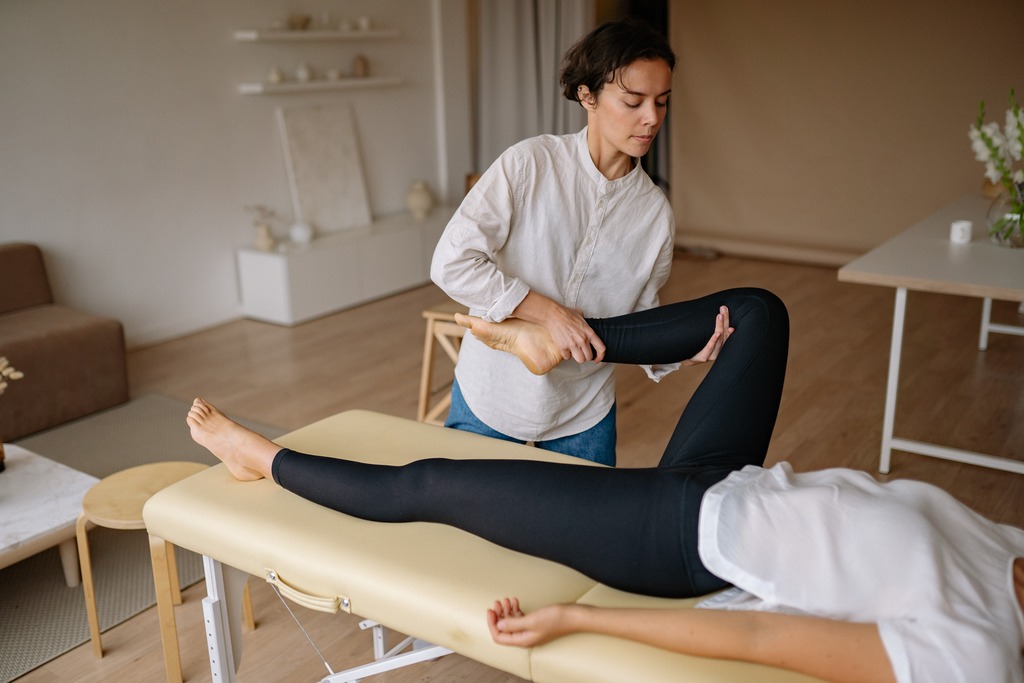
Physical therapy is also called physiotherapy, and this is often recommended for knee ligament injuries by sports or orthopedic surgeons. These physical therapy exercises contain Strengthen Knee Ligaments for the knee physiotherapy.
A physical therapist will do the physiotherapy and guide you through exercises and stretches so that you will recover from injury and also target the muscles around your knee to improve strength and stability.
3. Strength Training Exercise:
Strength training exercises focus on strengthening of the muscles that support the knee joint, There are particular groups of muscle that will help to make strong of the knee.
These muscles include the quadriceps muscles (front thigh muscles), hamstrings muscles (back thigh muscles), calf muscles, and hip muscles. Some effective stretching exercises include leg pressing, leg extensions, hamstring curls, calf raises, and hip abduction and adduction exercises.
4. Core Strengthening:
A strong core exercise for the knee can help improve overall stability. These are also the knee ligament exercises that make your knee stronger. This type of knee core exercise can take some pressure off the knees initially, which later will lead to increased strength of the knee in the future.
The core training for the knee helps to target the core muscles and strengthen Knee Ligaments. The core strengthening includes exercises like planks, bridges, and leg rises, leg extension
5. Balancing Exercises:
Besides core and strengthening exercises, Balance exercises will help to improve proprioception part of the body. This balancing exercise will raise awareness of your body’s position in and enhance stability.
Some of the balancing exercises include standing on one leg, the use of a balance board, or practicing yoga, and so on.
6. Stretching of Knee
Stretching of the knee helps to maintain the flexibility in your leg muscles, which will become strong and flexible. When stretching of knee, the special muscle quadriceps and hamstrings will have good flexibility. Stretching exercises can help prevent muscle imbalances that may contribute to knee problems.
7. Minor Aerobic Exercise:
Engage in simple aerobic exercises helps for muscles and improve flexibility. The low-impact exercises like cycling, swimming, cycling, skipping, and running on a treadmill will improve cardiovascular fitness without putting excessive strain on your knees.
8. Focus on Proper Form and Technique:
Whenever performing the exercise for knee pain relief or otherwise, you always need to pay attention to the form and technique you use. Use of improper form can increase the risk of re-injuring and add more strain on your knee ligaments.
9. Gradual Progression:
Never exercise aggressively. Always have slow Start then gradually increase the intensity and duration of your exercises. So, if you’re recently recovering from injury keep in mind to avoid overloading your knees. while strengthen knee ligaments gradual progress is important.
10. Take Rest for Recovery:
Adequate rest is important for muscle repair and the growth process. Continuous exercise can lead to Chronic Fatigue Syndrome as well..
Not only take rest after injury, but after doing stretching and exercise, you need to have rest to allow your body sufficient, time and certainly they will recover between workouts
11. Nutrition and Diet
Workout means exercforemusclesscle and ligaments. Your body needs good nutrients for growing and being healthy. Sa o balanced and healthy diet is necessary. The food with adequate protein, calciand um, and minerals are recommended. Sometimes may need to consult with the dietitian as well.
12. Keep and Maintain Hydration:
When you are doing the workouts and exercise, you need to stay hydrated. Proper nutrition and good hydration can support muscle recovery and overall joint stability and its health.
Summary Table: How to Strengthen Knee Ligaments
This table shows the safe exercises for making the knee ligaments (ACL, PCL, MCL, LCL) stronger, reducing stress on the joints, and promoting stability.
| Exercise | Primary Muscles Worked | How It Supports Knee Ligaments | Key Form Tip |
|---|---|---|---|
| 1. Straight Leg Raises | Quadriceps | Builds quad strength without bending the knee, stabilizing the joint. | Keep your supporting leg slightly bent, core engaged. |
| 2. Hamstring Curls | Hamstrings | Strengthens posterior support for the knee, balancing quad strength. | Control the movement; don’t use momentum. |
| 3. Glute Bridges | Glutes, Hamstrings | Strong glutes control hip/knee alignment, preventing valgus collapse. | Squeeze glutes at the top; don’t over-arch your back. |
| 4. Wall Sits | Quadriceps, Glutes | Builds isometric endurance in key stabilizers. | Keep knees at a 90° angle, directly over ankles. |
| 5. Calf Raises | Calves (Gastrocnemius) | Supports the posterior chain and knee stability during movement. | Rise up onto your toes slowly; lower with control. |
| 6. Clamshells | Gluteus Medius | Strengthens hip abductors to keep the knee tracking properly. | Keep your hips stacked; don’t let your torso rock back. |
| 7. Quad Sets | Quadriceps | Re-activates the VMO muscle, critical for patellar tracking. | Focus on feeling the muscle tighten near your knee. |
| 8. Terminal Knee Extensions (with band) | Quadriceps | Isolates the final 30° of extension, key for ligament stability. | Ensure the band is anchored securely and focus on squeezing the quad. |
| 9. Shallow Standing Squats | Quads, Glutes, Hamstrings | A functional, safe strength-builder for daily movement. | Never let your knees cave in; keep weight in your heels. |
| 10. Step-Ups | Quads, Glutes | Improves single-leg stability and control. | Push through the heel of the stepping leg; avoid pushing off the back foot. |
| 11. Heel Slides | N/A (Mobility) | Restores range of motion and reduces stiffness post-injury. | Focus on smooth movement, not forcing the stretch. |
| 12. Swimming / Water Walking | Full Lower Body | Builds strength with minimal impact, ideal for recovery. | Use the water’s resistance to challenge your movements. |
Essential Recovery & Prevention Tips for the knee
Strengthening is only one part of the equation. You can follow these tips for optimal knee health and recovery during the knee ligament exercises. These knee pain relief tips will actually help you lots
Maintain a Healthy Weight: Every extra pound places multiplied stress on your knee joints. Weight management during knee physical exercise is a key form of prevention.
RICE for Acute Injuries: For a new sprain, follow Rest, Ice, Compression, and Elevation to manage initially in order to reduce swelling and pain.
Listen to Your Pain: Know about the Pain . Distinguish between muscle fatigue and sharp, joint-specific pain. Stop immediately if you feel the instant pain.
Warm-Up and Cool Down: Never exercise on cold muscles. A proper warm-up (e.g., light cardio) and cool-down (gentle stretching) are needed
Prioritize Form Over Everything: Poor form is the fastest way to re-injury. If needed, work with a physical therapist to learn the correct movements.
Incorporate Low-Impact Cardio: Activities like cycling (with proper seat height) and the elliptical maintain fitness without pressure on the joints. This type of tip is helpful for ACL recovery after the surgery.
Wear Supportive Footwear: Shoes with good support improve your joint stability. Supportive wear will affect alignment from your feet up to your knees.
When Not to Strengthen Knee Ligaments?
Every time you should not strengthen your knee ligaments. There are different times you should remember when not to do these exercises. These will further help to prevent reinjuries. In the following conditions, you should not strengthen ligaments.
- When you have more pain day by day
- If Pain is intolerable
- On acute Trauma
- If you feel discomfort
- When the doctor does not recommend
- If you have an infection in a joint or over
- If Vitals of patient’s vitals are not good
In the above conditions, you need to stop the Strengthen Knee Ligaments exercise. As soon as possible, consult a specialized doctor or health care professional
Last Lines
As said earlier, strengthening knee ligaments is important for maintaining stability and further preventing knee injuries. These effective strategies and tips in this guide will help to perform effective knee ligament exercises and tips and eventually strengthen your knee ligaments and improve overall knee health.