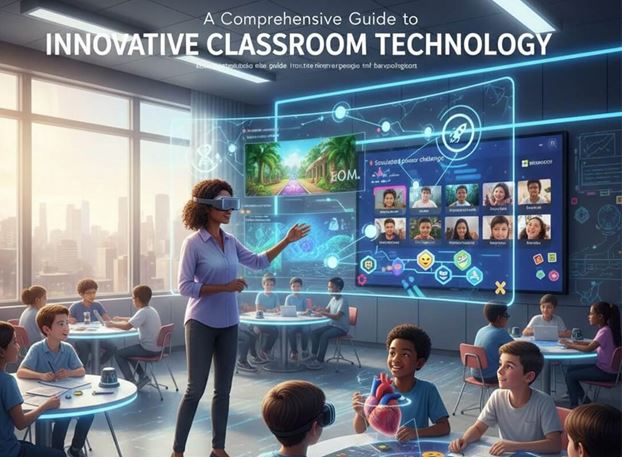
Education has changed in the past few years. Shift from traditional ways to innovative teaching methods, like using technology.
Imagine walking into a class, and you see learners early work together in order to solve practical life problems. Also, they explore engaging digital tools or learning via huge games instead of gazing empty chalkboard.
Well, this does not sound like your ordinary school experience. Right? This is the world of new and modern teaching techniques. This is a shift from an outdated learning style.
Whereas the use of tech in new education is not only about digitisation. But as well as adopting 21st century skills that are demanding, allow students to think critically, teamwork, and develop problem solving skills.
Universities that have been heavily dependent on traditional learning methods and do not use any modern tech. These universities remain behind other universities that adopt new and innovative learning styles.
Which is why I have created this detailed guide to classroom techs that boost learning and knowledge. Let’s explore more in the next section.
Why Innovative Classroom Matters in Today’s Learning Setting?
In the 21st century, students are growing up. However, the problem is that plenty of schools still use the traditional teaching method, such as the blackboard. Plenty of students are annoyed by this, and they are unable to develop their skills in this outdated learning style.
That is why innovative learning matters, since it closes the gap between theory and practice. Also, teach students far beyond the walls of the classroom, and hence they develop the skills that they truly need.
As per to the Rand report in 2025, 54% of learners and 53% of English language arts, math and science tutors point out they used tech for school.
Moreover, this method makes a flexible and compelling learning experience for both academic success and personal progress.
Here are some reasons given below.
- Changing students’ needs in the digital age– Because it is the world of Gen Z and Alpha, they have a unique way of learning compared to past generations. The Gen Z born in the social media era, and the Alpha are truly AI native Gen. That is why teachers need to adopt new methods. They can use creative learning styles such as engaging learning, flexible learning streams and practical learning experience, which keep student interest with a focus.
- The tutor’s position in new models of education– The new model of education, where teachers perform the role of facilitators, not lecturers. Now, with the use of pedagogical training and classroom experience, teachers assist the debate, mentor students and offer constant feedback. Further, the practice of learning comprises teamwork, personalised support and reflective teaching processes.
How Student Centred Innovative Education Transforms Learning
The innovative learning refers to the adoption of new methods, techs and pedagogical methods to change teaching and learning. This new method moves away from the traditional method of learning.
It welcomes and embraces the fact that every student is different from others. And they learn best when education is tailored to suit their needs, skills and interests.
1. The True Meaning of Student Centred Learning
Learning centre is a technique that allows individual pacing, where students are assigned time and praise to learn.
This style supports freedom in learning for the learners to make them liable for their studies. And then they work on their strengths rather than their weaknesses.
2. Practical Experiments in Student Centred Innovation in the Classroom
In real classrooms, student-centred tech in education takes the shape of flipped classrooms, personalised learning plans, and peer-led group projects.
While the teacher is out of the classroom, students read freely and take part in class debates, group projects, and problem-solving.
3. Growth in Social and Emotional Ability in Models Focused on Students
Outside of the classroom, student-centred methods support personal and social growth.
Students gain self-pledge, improve their communication abilities, journal publication skills and gain leadership skills through teamwork and collaborative learning experiences.
Practical tips to integrate tech in the classroom
Below are some practical tips for using and integrate a tech in the classroom.
1. Begin Small and Create Gradually
Once tutors introduce tech in the classroom, they should use it with effective goals. Rather than fixing the whole syllabus instantly, they must aim to combine a single tool or platform that can help their teaching method. Also, the style must meet the students’ needs.
For instance, Teachers may begin by using a simple LMS to upload resources and assignments; then, when they are ready, go on to more advanced tools like online classrooms or multimedia content production.
2. Unite Engaging Learning Tools
Engaging tools offer a great way to catch the attention of students and boost their engaging while lesson. Quizzes, polls, games and even teamwork projects, teachers can apply in the classroom.
Examples:
- Gamification- Kahoot, Quizizz- Tutors can use these for competitive review sessions, format quizzes or check for grasping moments that boost high awareness.
- Book Widgets- To unite Book Widgets in the classroom, tutors must create personalized games such as crosswords or jigsaw puzzles to review vocabulary or historical numbers.
3. Flipped Classroom Style
Via videos or reading materials, the flipped classroom model enables students to study written content outside of class.
By using this method, they can apply what they have absorbed in engaging, hands-on activities for the duration of class time.
Thus, this method develops and elevates huge learning and offers students more time to concentrate on problem solving and critical thinking lectures
4. Joined learning via digital tools
Assisting and encoding teamwork in the classroom is now very much easier with digital tools. Some platforms enable students to work together on projects on real time.
It does not matter where students are physically. This could be mostly effective for group work, PPT or peer reviewers.
5. Examine the Potential of Multimedia
The days of powerlessly relying on textbooks for education are over. You may greatly improve your teaching by including multimedia, such as videos, podcasts, animations, and even virtual reality (VR), which allows you to accommodate various learning styles.
Virtual simulations and interactive VR experiences may be helpful for kinesthetic learners, while podcasts and videos provide an interesting approach for auditory and visual learners to assimilate material.
Teaching Methods and Strategies for Effective Learning
Successful teaching tactics are an essential part of any digital classroom, but technology like digital smart boards and interactive whiteboards is only part of the equation.
By using these tactics, educators can foster a more interactive schoolroom environment, encourage students to think critically, and improve their overall grasp of the material.
- Approaches to Learning Through Collaboration- Promotes collaborative learning by having students work in groups to complete assignments. With the use of smartboard tech, several pupils can use the screen at the same time to write, draw, or text. To build teamwork, communication, and problem solving abilities.
- AI-Powered Personalised Learning Resources- Since every student learns at their own speed, a smartboard that incorporates artificial intelligence can cater to their individual needs in the classroom. Based on student strengths and shortcomings, teachers have the ability to adapt tasks. As a result, this guarantees that no student is lacking.
- Getting students involved and involved- Fun and interactive teaching tools like polls, quizzes, and brainstorming sessions shown on touch screen boards are a hit with students. Instead of sitting on the sidelines, students actively take part. So promotes diligence, interest, and active engagement in the classroom.
Challenges while using Tech in a Classroom
Indeed, it is not always smooth sailing. Tech only works if match with thoughtful execution.
Do you struggle to open a document when the internet connection is down? This is where problems start.
Here are some challenges tutors need to think about.
- Problems with access: Not all students have a laptop or a reliable internet connection at home. To make sure that no one slips behind, schools need to fix these problems. Also, implementing tech in a classroom can be costly.
- Distractions: It’s hard to stay focused when TikTok and YouTube are just a click away. Teachers need to find methods to get pupils to use instructional tools without always being tech cops
- Teacher Training: For technology to perform its magic, teachers need to know how to use it well. Schools need to spend money on training to assist teachers get used to these new tools.
Ending Thought
Latest trends in education are shifting teaching methods to move away from traditional methods to student centre approach and tech driven.
Tech such as gamification, VR, flipped classroom, and personalised learning make education more engaging.
Schools that accept these new methods of teaching do not just boost their academic performance. But they as well prepare students for a new world, and help them develop skills.They also teach students how to think far beyond the classroom and move away from the memorisation learning method.