
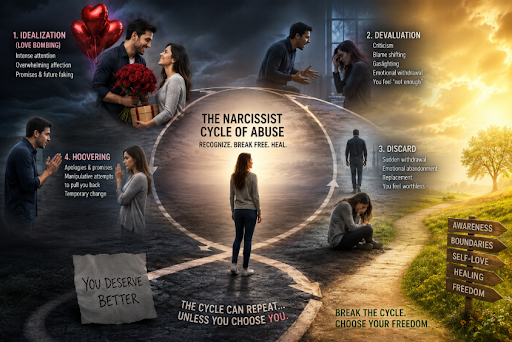
The Narcissist Cycle of Abuse: Understanding the Pattern and Breaking Free
The narcissist cycle of abuse is a pattern that happens over and over in relationships with people who have narcissistic personalities. This pattern is made up of manipulation, emotional control, and psychological harm. Many people who have been in these relationships say that they experienced a cycle that kept repeating, causing confusion, dependence, and emotional distress.
Understanding this cycle is usually the step towards recognising toxic behaviour and taking back control of your life. By learning about the cycle of abuse, you can identify warning signs, set healthier boundaries, and start the healing process.
This article explores the stages of the narcissist cycle of abuse, how it affects the people in these relationships, and practical ways to recover.
What Is the Narcissist Cycle of Abuse?
The narcissist cycle of abuse is a repeating pattern of behaviours that a person with a personality disorder uses to control and dominate others. This cycle often starts with affection followed by manipulation, criticism, and emotional withdrawal.
Many people who are in these relationships have a hard time recognising the pattern because the good times are mixed with the bad. The moments of affection and remorse can give them hope that the relationship will get better, making it harder to leave.
The cycle usually has four stages:
- Idealization, also known as love bombing
- Devaluation
- Discard
- Hoovering
These stages can last for amounts of time and can be more or less intense, but they often repeat throughout the relationship.
Stage 1: Idealization and Love Bombing
The relationship usually starts with overwhelming attention and admiration. This stage is often called love bombing.
During this time, the person with the personality may:
- Give you a lot of compliments
- Say they love you quickly
- Promise a perfect future together
- Make you feel like you have a connection
- Want to talk to you all the time
You might feel very valued and understood. The attention can seem real and exciting, especially if you are looking for connection or support.
However, the main goal of love bombing is often to make you emotionally attached and dependent. Once you trust them and are attached, they may slowly start to change their behaviour and move on to the stage.
Common Signs of Love Bombing
- Much flattery
- Saying they love you quickly
- Pushing you to commit
- Calling you all the time
- Doing romantic gestures
At first, these behaviours might seem caring and affectionate. Over time, they can become ways to control you.
Stage 2: Devaluation
After the idealisation phase, the person with the personality starts to change their behaviour. They might not be as affectionate or admiring. They might start to criticise you.
The devaluation stage can be subtle at first. You might notice:
- More criticism
- Aggressive comments
- Emotional distance
- Mood swings
- Blaming you for things
They might start to attack your confidence, appearance, intelligence, or abilities. They often create confusion by being kind one minute and cruel the next.
Gaslighting During Devaluation
Gaslighting is a tactic during this stage. It means manipulating someone into questioning their reality, memory, or judgement.
Examples include:
* Denying things that really happened
* Twisting conversations
* Downplaying your concerns
* Saying you are too sensitive
Over time, you might start to doubt yourself and rely more on their version of what’s real.
Why Devaluation Happens
Many people with personality disorders have a strong need to control and be validated. Once the excitement of the relationship wears off, they might become critical, demanding, or emotionally abusive to keep power in the relationship.
You might try harder to get the affection you felt during the idealisation stage, which creates a painful cycle of seeking approval.
Stage 3: Discard
The discard stage happens when the person with the personality emotionally or physically distances themselves from you.
This phase can include:
- Suddenly pulling away
- Giving you the treatment
- Emotionally abandoning you
- Ending the relationship without warning
- Pursuing sources of attention
The discard can be very hurtful because it often happens without warning. You might be left feeling confused, heartbroken, and desperate for answers.
In some cases, they might openly replace you with someone, which can make you feel even more rejected and inadequate.
Emotional Impact of Discard
You might feel:
- Anxious
- Depressed
- Uncertain about yourself
- Lonely
- Like you have lost your self-worth
The discard stage often leaves people wondering what they did wrong, even though the abuse was never their fault.
Stage 4: Hoovering
Hoovering means the person with the personality tries to pull you back into the relationship.
The term comes from the idea of “vacuuming” someone into the cycle.
Common hovering tactics include the following:
- Apologizing
- Promising to change
- Sending messages
- Giving you gifts or attention
- Creating crises to get sympathy
They might suddenly become affectionate and caring again, like they were during the idealisation stage that initially attracted you.
Because you might miss the times from earlier in the relationship, hoovering can be very effective.
Unfortunately, once you go back, the cycle usually starts again.
Why the Narcissist Cycle Repeats
The cycle of abuse repeats because it serves important psychological functions for the person with the narcissistic personality.
These functions might include:
- Keeping control
- Getting admiration
- Avoiding responsibility
- Regulating their self-esteem
- Creating dependence
The alternating periods of affection and mistreatment can also create what psychologists call a trauma bond.
Understanding Trauma Bonds
A trauma bond develops when good and bad experiences get mixed.
You might feel emotionally attached even though you are being abused because the good moments give you relief from emotional pain.
This dynamic can make it very hard to leave the relationship.
Warning Signs You Are Experiencing the Cycle
Recognising the cycle of abuse early can help prevent long-term emotional damage.
Warning signs include:
- Feeling confused about the relationship
- Walking on eggshells
- Constantly seeking approval
- Getting. Blamed a lot
- Having highs and lows
- Losing confidence
- Being isolated from friends and family
If these patterns feel familiar, it might be helpful to look at the relationship closely and get professional help.
The Long-Term Effects of Narcissistic Abuse
Abuse can affect almost every area of your life.
Emotional Effects
- Chronic anxiety
- Depression
- Shame
- Guilt
- Emotional exhaustion
Psychological Effects
- self-esteem
- Being constantly on guard
- Having trouble trusting others
- Being confused about your identity
- Having symptoms of trauma
Relationship Effects
- Being afraid of intimacy
- Having trouble setting boundaries
- Trying to please others too much
- Being afraid of abandonment
The impact often lasts long after the relationship is over.
How to Break the Cycle of Abuse
Breaking free requires awareness, support, and a commitment to healing.
1. Recognize the Pattern
Learning about the cycle is one of the powerful tools you can have. Understanding the cycle helps you identify manipulation tactics and regain clarity.
2. Set Healthy Boundaries
Having boundaries reduces the opportunities for manipulation.
Examples include:
- Limiting contact
- Refusing to engage in conversations
- Protecting your information
- Enforcing consequences consistently
3. Consider No Contact
Many people find that having no contact is the effective way to heal. This might involve:
- Blocking communication channels
- Avoiding media interactions
- Ending communication
In situations where you have to co-parent or deal with legal issues, having limited contact might be more practical.
4. Get Professional Help
Therapists who are familiar with abuse can provide valuable guidance and validation. Professional help can assist you in:
- Processing trauma
- Rebuilding your self-esteem
- Developing coping strategies
- Creating safer relationships
5. Reconnect With Yourself
Abusive relationships often cause people to lose touch with who they are. Healing might involve:
- Finding hobbies you enjoy
- Pursuing goals
- Strengthening friendships
- Practicing self-care
Taking steps can gradually help you rebuild your confidence and independence.
Healing After Narcissistic Abuse
Recovering is not a process. Some days might feel empowering while others might bring sadness or uncertainty.
Healing often involves:
- Accepting what happened
- Processing your grief
- Rebuilding your self-worth
- Learning relationship patterns
- Developing emotional resilience
Being patient and kind to yourself is essential throughout the journey. Every step towards healing is a step away from the cycle of abuse.
Final Thoughts
The narcissist cycle of abuse is a pattern that can leave lasting emotional wounds. Understanding the stages of idealisation, devaluation, discard, and hoovering helps you recognise manipulation and regain control over your life.
Being aware of the cycle is often the beginning of freedom. By identifying patterns, setting boundaries, and getting support, you can break free from the cycle and build healthy, more fulfilling relationships.
Recovery takes time. Healing is possible. With knowledge, support, and self-compassion, you can move beyond the pain of abuse and create a future defined by strength, clarity, and emotional well-being.
Total Views: 24