
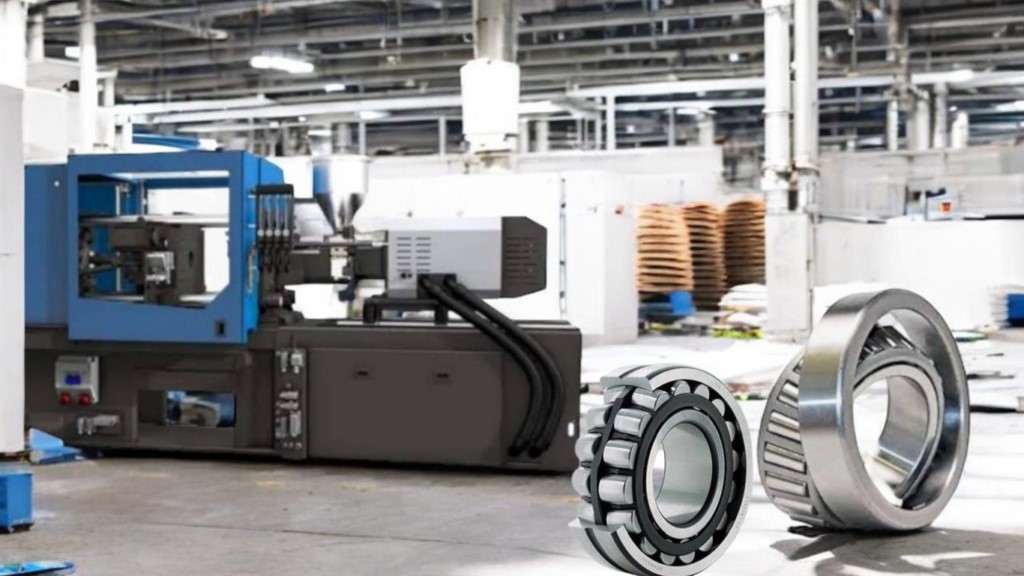
The Role of Indian Taper Roller Bearings in Automotive & Heavy Machinery Industries
In the Indian industrial market for procurement, critical components that can oftentimes be overlooked by the untrained eye, are actually the ones that make or break operations. What we are referring to in this context is parts with a size no bigger than a coffee mug.
This is, of course, the situation for project managers and procurement heads all over India. To make the challenge even bigger, it is no longer just about locating such a part but making sure it can survive the tough circumstances India poses such as extreme heat, dust, and harsh operating conditions.
If we put our focus in the very heart of power transmission and load management, we cannot avoid talking about the pivotal role Taper Roller Bearings India manufacturers have in the global supply chain. It is worth noting that these are no longer simple “commodities”, but rather, very carefully engineered products that are capable of handling combined loads.
This article is your guide to understanding the market, picking the most important technical standards, and the necessary steps to be able to get parts that ensure a sound return of investment over a long period of time.
Understanding the Geometry of Reliability
To decide a sourcing point, it is essential to acknowledge the design features that give a tapered roller bearing such a high level of efficiency. Tapered bearings are slightly different from ball bearings that mainly support radial loads because the design of the former (inner and outer ring raceways and tapered rollers) is capable of handling significant thrust and radial loads at the same time.
Really, it is a simple matter of geometry. The rollers are placed in a conical way so that the resulting contact lines meet at a single point at the bearing axis. The aim here is to provide a true rolling motion which is generally prevented by less efficient types of bearings where the skidding happens very frequently.
This design feature is what makes it possible for a 40-tonne vehicle to take a sharp turn in the mountains of Himachal Pradesh without any problems with the wheel hubs.
The Automotive Powerhouse: Precision at Scale
The automotive industry is still the largest buyer of these kinds of components in India. Whether it is the light commercial vehicles (LCVs) that are in charge of “last-mile” delivery or the heavy-duty long-haul trucks, there is a constant demand for precision.
1. Wheel Hub Assemblies
With automotive applications, taper roller bearings are almost always paired to accommodate thrust in both directions. This is an essential point because, let’s face it, it’s a very rare thing that a vehicle runs in a straight line on a perfectly flat road. Cornering results in lateral forces that require the bearing to be ‘pre-loaded’ properly.
2. The EV Shift and “Silent” Performance
To me, it seems as if the majority of purchasers tend to ignore the fact that quite a number of bearing manufacturers will have to change the way they do their business due to the shift to electric vehicles (EVs). When there is no longer a combustion engine in the background to cover up the noises, bearing NVH (Noise, Vibration, and Harshness) levels have to be drastically reduced. Top Taper Roller Bearings India manufacturers are said to be now adopting super-finishing techniques to achieve the raceway smoothness that will comply with these globally “whisper-quiet” standards.
Heavy Machinery: Where Durability Meets Dust
While it is a precision that the automotive market demands, the heavy machinery market which is made up of mining, construction and agriculture at no time compromises on the sturdiness aspect. A bearing is always a target of being bombarded by the environmental pollutants in a coal mine of Dhanbad or a construction site in Mumbai.
Material Integrity: The “Clean Steel” Standard
An essential takeaway for the sourcing is that the raw material is of excellent quality. The best Taper Roller Bearings India manufacturers often choose to supply only “case-hardened” steel that is capable of handling this kind of use predicament.
Case-hardened steel is one that is produced along with a heat-treatment which results in the outer layer being very hard and hence resistant to wear, while the core remains soft enough to absorb the impact.
Let me quote the words of an expert: a bearing that is hardened throughout, (and which is more economical to manufacture) is much more likely to be broken by shock loads of a rock crusher than a case-hardened one.
When you are checking the background of a supplier record, always make sure that you obtain the steel “inclusion rating”. The lesser the number of steel impurities, the longer the life in terms of fatigue.
Sealing Technologies: The First Line of Defense
Failure of a bearing in heavy machinery is normally due to failure of lubricant, and likewise, lubricant failure is because dust or water has penetrated the seal. There are certain criterias for Indian situations, as follows:
- Triple-Lip Seals: Providing several layers of protection against contamination.
- Specialized Greases: Designed to hold viscosity at temperatures as high as 48°C.
Navigating the Indian Regulatory and Quality Landscape
The Indian market is on the verge of a great formalisation. The “unorganized” sector which used to have its source of supply from low-cost, sub-standard imported goods is gradually disappearing due to the government’s strict regulatory measures.
The Essential BIS QCO
- A shift happened when the Ministry of Commerce and Industry rolled out the Quality Control Order. Now getting taper roller bearings from India means BIS certification is required – no exceptions. What changed? The rules tightened overnight. Before, buyers had options. Today, only certified products make the cut. One thing is clear: standards now decide what moves through supply chains.
A supplier dodging what they call a “non-ISI price”? That sets off alarms right away. Testing under BIS rules – especially IS 12102 – isn’t just paperwork. It means the bearing faced tough checks covering:
- Accuracy of dimensions (to rule out any misalignment).
- Firmness checks help confirm how much weight something can handle.
- Few signs of surface damage showed up when tested – no pitting, no cracking, nothing hinting at quick breakdowns later on.
Actionable Sourcing: A 5-Point Checklist for Procurement Heads
You can use this checklist to identify whether the people you are dealing with in the manufacturing company or the Tier-1 distributor are genuine or just middlemen.
1. Demand the Traceability Report
Rendering Taper Roller Bearings India back to the original steel heat lot should be traceable for each and every batch. You will be able to tell whether the failure of the bearing in the field is an isolated incident or a systemic batch failure if you have this knowledge.
2. Evaluate the “Contact Angle”
The angle that the outer ring raceway makes with the surface determines how much axial load the bearing will be able to handle. If the angle is steeper (greater ‘e’ value), then it would be more suitable for high-thrust vertical shaft applications. Do not just go for a “regular” bearing; rather, select the one that has a coefficient that fits your turning torque.
3. Inquire About “Crowned” Rollers
Look, under high loads, a normal cylindrical roller will undergo “edge loading” where the pressure will mainly be concentrated at the ends of the roller. The top-notch manufacturers make use of a “crowned” profile—there is a slight curvature at the ends—for the purpose of evenly distributing the stress across the entire roller. In the case of heavy machinery, such a feature can really extend the bearing’s life up to a factor of 2.
4. Surface Finish and Ra Values
Get the Ra figures for the contact surfaces. Smaller Ra means reduced resistance, so temperature stays lower. That leads to cheaper operation over time because power gets used more wisely. Remember, even tiny details like this shape long-term expenses – what you pay overall matters more than first thought.
5. Technical Support and Failure Analysis
When it comes to suppliers, you should be treated as their partners rather than their customers. Is on-site failure analysis among the services they provide? Can they offer help to your maintenance team in identifying the cause of a bearing failure? (Misalignment? Poor lubrication? Overloading?). If such a level of technical knowledge is not provided by them, then they are definitely not the right partner for a crucial project.
The Economic Reality: Price vs. Total Cost of Ownership (TCO)
Before you know it, you have fallen into the trap of only looking at the “per-unit” price of something. That is not to say that it is wrong. The truth is that a single bearing’s price is less than 5% of the cost that its breakdown causes in terms of production downtime.
Think about the so-called “Butterfly Effect” in a steel factory. One $200 taper roller bearing breaks down in a conveyor system. The conveyor stops. The furnace cooling is delayed. The whole production process is stopped for six hours. Thus, the true cost of this “cheap” bearing is, in fact, $20,000 in lost sales.
You know, the procurement methods that are considered most intelligent by Indian companies are gradually shifting from being “lowest bid” oriented to being “best TCO” oriented. By going for high-grade Taper Roller Bearings India, companies are, in a sense, purchasing an insurance policy against production stoppages.
Future Trends: The Digital Bearing
Various initiatives characterize the Industry 4.0 era and one of them is imparting a digital aspect to the use of the humble bearing. Some examples:
- Temperature checks happen live when tiny detectors sit inside rotating parts. These smart hubs report shaking data without waiting. Info travels straight to monitoring desks automatically. Vibration updates move through signals built into the hardware. Rotating units talk back using hidden tech woven into their frame.
- One moment a system runs fine – then sensors feed patterns into smart software. That software watches tiny changes over weeks, months. When wear nears its end, alerts appear quietly. Teams see warnings long before failure hits. Machines keep turning while people prepare spare parts. Shutdown windows fit naturally into calendars. No surprise breakdowns disrupt workflow. Repairs shift from chaos to routine.
In terms of business preparedness, procurement presently already means that you start questioning suppliers about their plans for these “intelligent” technologies.
Conclusion
To successfully source in the Indian B2B market, a combination of technical skepticism and strategic foresight is needed. The Taper Roller Bearings India market is a great example of the potential if you know how to tap it—getting great quality products at very reasonable prices.
Always rest on the standards. Check the certifications. Don’t only see the metal but the engineering that goes into the contact angles and the purity of the steel as well. Ultimately, whether or not your automotive fleet or heavy machinery will be dependable doesn’t come down to a brand name; it comes down to the physics of the bearing and the honesty of the manufacturer.
It is not a mere matter of keeping your wheels going because it is something that they should never break down unexpectedly at all. Partner up with a company that fully appreciates such a distinction, and your infrastructure will be able to thank you for years to come.
Total Views: 19